 Favors.dev
RIP Tokens
A graveyard for the AI tokens sacrificed to Claude Code during software development
About RIP Tokens
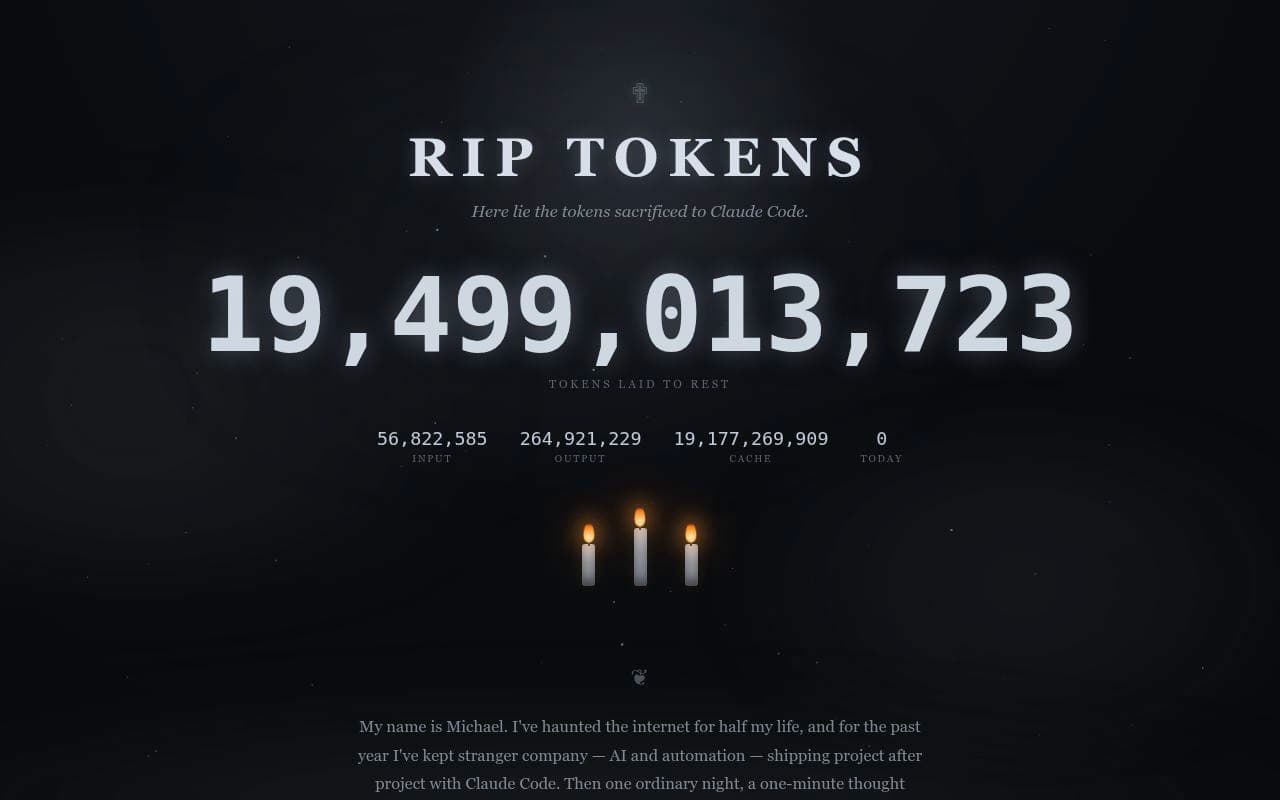
RIP Tokens is a live dashboard and memorial that tracks the total number of AI tokens consumed while building software with Claude Code. Created by developer Michael, the site serves as a visual record of the computational "sacrifices" made to ship features, open-source projects, and code.
Key Features
- Live Token Tracking: Displays a real-time counter of tokens consumed during the development process.
- Project Memorials: Lists specific open-source projects and the exact volume of tokens "laid to rest" to bring them to life.
- Model Analytics: Ranks Claude models by "body count," showing which versions have consumed the most tokens.
- Developer Transparency: Offers a unique look at the resource cost of AI-assisted coding workflows.
Frequently asked questions about RIP Tokens
What does RIP Tokens track?+
It tracks the total number of AI tokens consumed while using Claude Code to build and ship software projects.
How is the token data updated?+
The numbers are live; as the creator works and uses Claude Code, the counter climbs to reflect the new tokens sacrificed.
What information is provided about the Claude models?+
The site ranks Claude models by their total token usage, or body count, to show which versions are the primary executioners in the development process.
Community reviews
No reviews for RIP Tokens yet — be the first to leave one.
Support this launch
Members earn points for sharing, reviewing, and giving feedback on RIP Tokens. Not a member yet?
Join Favors.devMore from Michael
You might also like
- 3
JavaScript Tools
Privacy-first developer tools that run in your browser.
- 2
VibeVue
Micro project management-app
- 2
Voiden API Client
Extensible, Git-Native Client for all your API workflows
- 2
APIXP
Access 50+ APIs including AI models, media tools, and utilities with a single API key
- 2
Harneloop
Open source framework for Self-evolving AI agent harnesses with portable harness units
- 1
vibenscan
loveable lauched your business in 30 seconds. we make sure it doesn't break in production.