 Favors.dev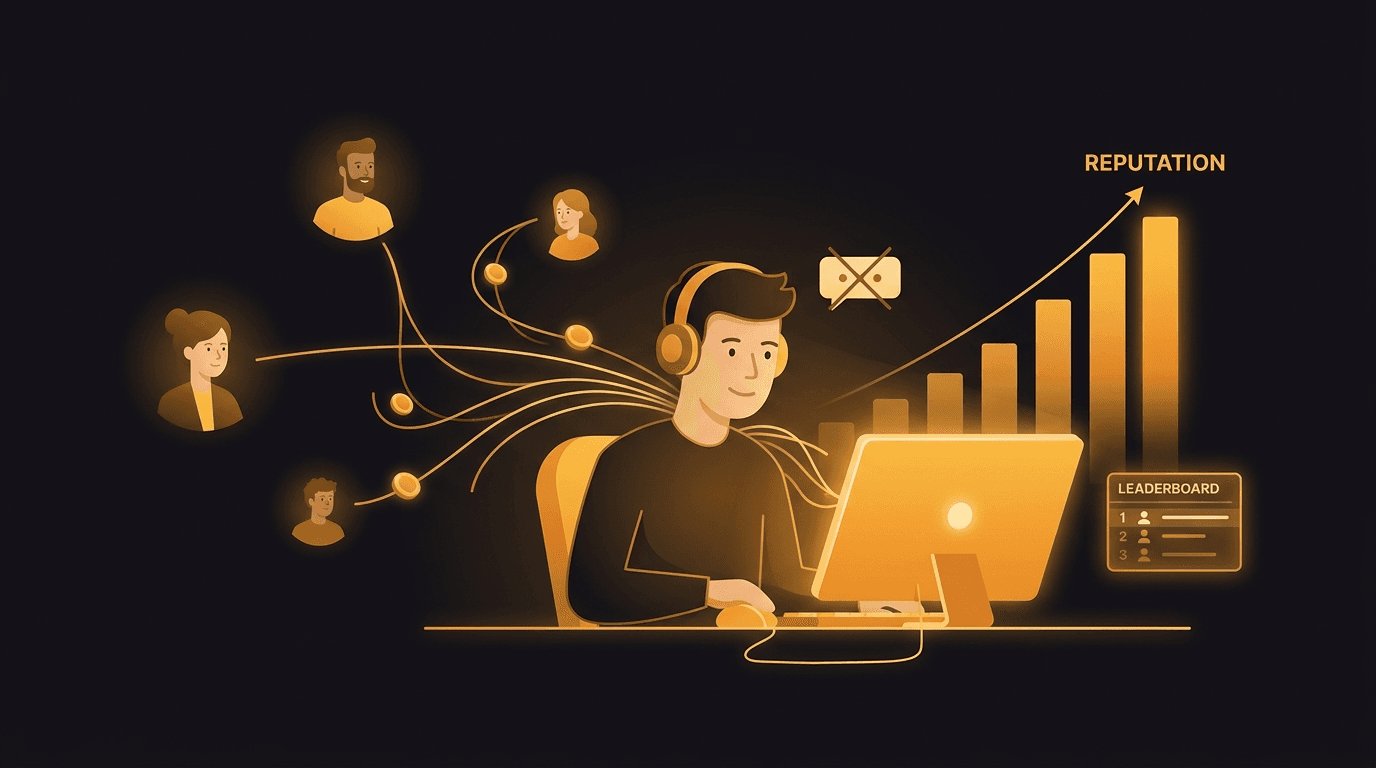
You can build a personal brand as a founder who hates self-promotion, and the way you do it is to stop promoting yourself entirely. Reputation is a byproduct of being useful in public, not a campaign you run about yourself. Help enough people where they can see it, and a brand accumulates on its own — no hot takes, no "excited to announce," no pretending to be an extrovert.
I'm writing this as someone who winces at the phrase "build your personal brand." Most advice on it assumes you secretly want to be an influencer and just need permission. This is the version for the rest of us — the builders who'd rather ship than post, and who suspect (correctly) that a feed full of milestones is a strange way to earn a stranger's trust.
Why self-promotion backfires for builders
Self-promotion backfires for builders because the thing you're promoting — yourself — is not what your buyer is trying to evaluate. They're trying to figure out whether your product solves their problem and whether you're the kind of person who'll still be around in a year. A stream of "10 lessons from my journey" posts answers neither question. It reads as performance, and builders are unusually bad at performance, which is why it feels so hollow to do.
The deeper trap is the premise. Conventional personal-brand advice treats attention as the asset: get seen, get followers, convert the audience later. For a solo founder pre-launch, that's a multi-year bet with a terrible early return, and it demands the one thing an introverted builder has least of — an appetite for being the center of attention. So the advice quietly filters out exactly the people who'd benefit most from a good reputation, and hands the game to whoever is loudest.
But a reputation and a personal brand are not the same thing. A personal brand is what you say about yourself. A reputation is what other people can say about you when you're not in the room. Only one of those actually gets a stranger to try your product — and it happens to be the one you can build without ever promoting yourself.
Reputation is a byproduct of usefulness
Here's the reframe the whole post turns on: you don't build a reputation, you deposit one. Every genuinely useful thing you do in public — a precise answer to a question someone actually asked, an honest review that saves a founder a bad decision, feedback that sharpens someone's pitch — is a small deposit into how people remember you. You're not performing a brand; you're accumulating a track record.
This is why usefulness beats visibility for builders. Visibility asks you to be interesting on demand. Usefulness only asks you to do the thing you're already good at, in a place where it's visible. An introvert who gives one sharp, specific answer a week will out-earn, in trust, an extrovert who posts daily and helps no one. The work does the talking, which is the only arrangement a builder is actually comfortable with.
It also dovetails with founder-led marketing: the reason a founder's voice converts better than a brand's isn't volume, it's credibility — and credibility is earned by being right and being helpful, over and over, in view of people who remember.
Helping in public beats posting in public
The practical rule is short: help in public instead of posting in public.Both are "being online as a founder." Only one of them builds something when nobody's clapping. Here's how the two compare on the dimensions that matter to a builder who'd rather not be performing:
| Posting in public | Helping in public | |
|---|---|---|
| What you actually do | Broadcast opinions, milestones, and takes about yourself. | Answer a real question, review someone's product, leave useful feedback. |
| Cost to an introvert | High — performance, exposure, the ick of talking about yourself. | Low — it's just doing the work you already do, in view of others. |
| What it builds | Reach, if the algorithm cooperates. Often just noise. | Trust and a track record other people can vouch for. |
| If nobody claps | It was a waste — the value was the attention. | The person you helped still remembers. The value already landed. |
| Does it compound? | Rarely — a post's half-life is a day. | Yes — a reputation for being useful accrues for years. |
| What AI engines see | One more self-referential post to ignore. | A named contributor behind reviews, answers, and articles — the stuff they cite. |
The bottom row is the one most founders miss. Search is going answer-first, and the answer engines don't cite your follower count — they cite reviews, community discussion, and named-author content. Perplexity especially rewards attributed, named sources (5W State of AI Citations 2026, via Similarweb). A founder who is the named person behind a trail of reviews, answers, and articles is feeding the exact signals that get a brand named inside an AI answer. The self-promoter's feed feeds none of it. And because only 14% of marketers even track AI citations yet (GoodFirms), being that useful, named contributor is an open lane almost nobody is running in.
How a founder's reputation actually compounds
A reputation compounds the same way a backlink does: each useful act keeps working long after you've moved on, and they stack. The person you helped in March mentions you to someone in July. The review you left is still ranking, still being cited, a year later. Nobody remembers a single post; everybody remembers the founder who was consistently, specifically helpful. That memory is an asset, and unlike reach, it doesn't reset when the algorithm changes.
The catch is that this only works if the usefulness is real and visible — and in most places it's neither tracked nor rewarded, so the generous people quietly carry the room and burn out. That's the exact problem Favors.dev was built to fix. It's a founder marketing co-op where being useful is metered: you earn points for verified help — reviews, feedback, testimonials, shares, backlinks — and your track record is permanent and public. Your standing on the leaderboard and the history on your founder profile are a reputation you built by helping — not a following you built by performing. It's a personal brand made entirely of receipts.
This is the introvert's version of building in public. You're still accumulating a public reputation; you're just doing it through contribution instead of broadcast. If you want the broadcast side too — done in a way that doesn't require a follower count — the build-in-public playbook is the companion piece to this one.
The minimum viable founder presence
You don't need a content machine. You need the smallest presence that lets your usefulness be found and remembered. Three parts, a few hours a month, no charisma required:
A page that does the talking
One home for your work — a project page, an about section, pinned repos. It states what you do so you don't have to keep saying it. This is your brand's floor, and it needs zero charisma.
A useful footprint, not a feed
Show up where founders already gather and leave things better than you found them: a specific answer, an honest review, real feedback. Ten useful contributions beat a hundred hot takes.
One thing you make in public
Pick a single artifact — a monthly write-up of what you learned, or a quarterly teardown. Made once, findable forever. It's helping in public wearing content's clothes.
That's the whole system. A page that states what you do so you never have to pitch yourself cold. A footprint of real help where your buyers already are. And one artifact you make in public so the help outlives the moment. Run it for a few months and you'll notice something that no amount of self-promotion buys: people you've never met describing your work accurately, to other people, without being asked. That's a personal brand. You just built it by being useful.
Frequently asked questions
Do I really need a personal brand to succeed as a founder?
You need a reputation — which is not the same as a personal brand. A personal brand is what you say about yourself; a reputation is what other people can say about you when you're not in the room. For a solo founder, the reputation is what actually moves the needle: it's what makes someone try your product, vouch for you, or link to your site. You can build that entirely through being useful, without ever running a self-promotion campaign.
How do I build a personal brand if I hate self-promotion?
Stop trying to promote yourself and start being visibly useful instead. Answer questions in the communities where your users hang out, give honest reviews and feedback to other founders, and publish one thing that helps people with a problem you understand. Reputation is a byproduct of usefulness — do enough useful things in public and a brand accumulates on its own, without a single 'look at me' post.
Isn't helping other founders just marketing to your competitors?
Almost never. Most founders you'll help aren't competitors — they're peers in adjacent spaces who each have their own audience, their own website, and their own credibility. When you help them, you earn the exact actions that build your distribution: a share to a network you don't have, a review AI engines cite, a backlink from a real site. Reciprocity turns a room full of peers into a channel, which is the whole idea behind a founder marketing co-op.
Does a personal brand actually help with AI search and getting cited?
Yes, and it's the underrated reason to build one in 2026. Answer engines like ChatGPT and Perplexity disproportionately cite reviews, community discussion, and named-author content — Perplexity in particular rewards attributed, named sources (5W State of AI Citations 2026, via Similarweb). A founder who is a named contributor behind reviews, answers, and articles is feeding exactly those signals. Meanwhile only 14% of marketers even track AI citations (GoodFirms), so being citable now is an open lane.
What's the minimum I can do and still build founder credibility?
Three things: a single page that states what you do so you never have to pitch yourself cold, a habit of leaving genuinely useful contributions where founders gather, and one artifact you make in public — a monthly write-up or a teardown. That's a maintainable presence for an introvert, it costs a few hours a month, and it compounds because usefulness has a long memory.