 Favors.dev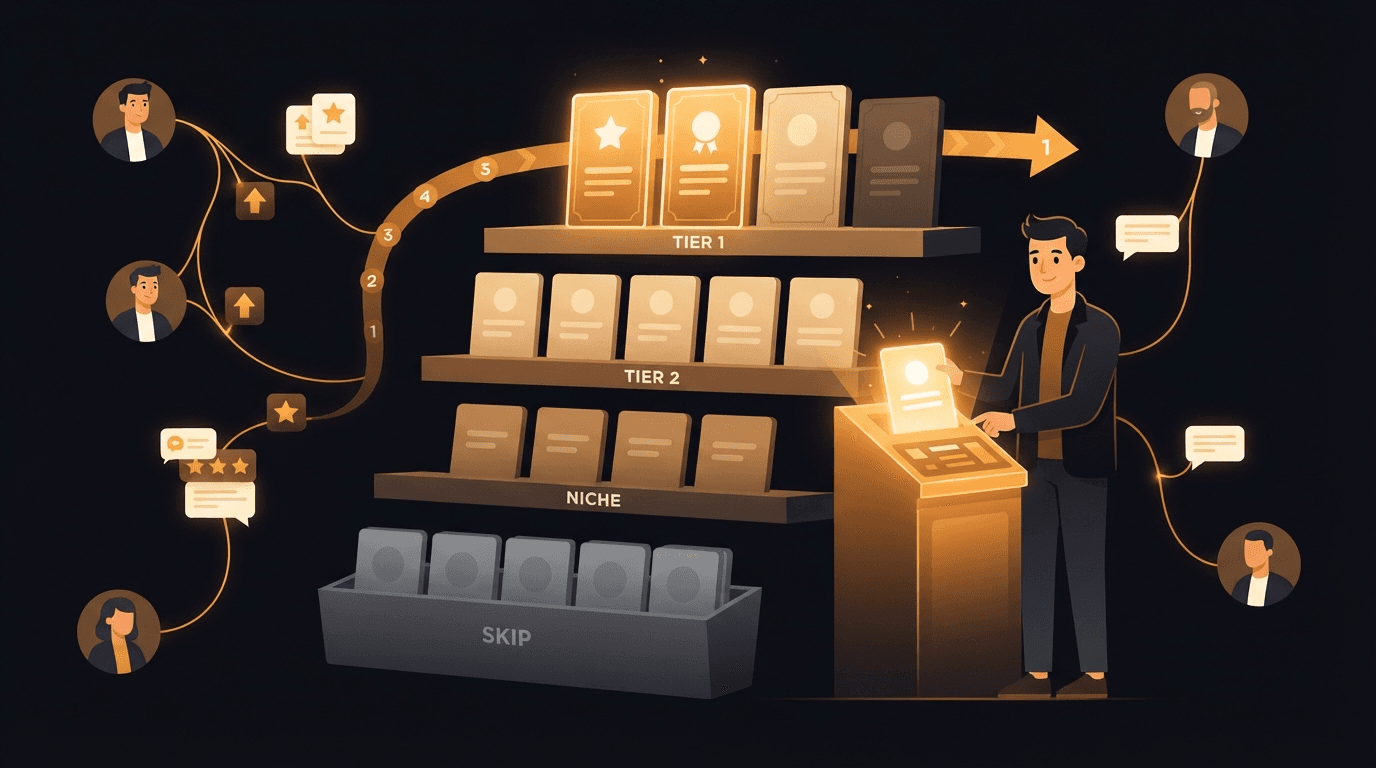
Startup launch directories are the sites that list new products with a description, screenshots, and a link back to you. About a dozen of them are worth your time, the order you submit in matters more than the count, and the useful ones fall into two different jobs: launch feeds that give you one loud day, and catalogues that give you a page which keeps being found.
Almost every “100+ directories” list you'll find is published by a company that either runs a launch platform or sells a mass-submission service, and it shows: the advice is always “submit to more,” never “submit to these, in this order, and then stop.” This guide is the other version. Every directory named here has a page in our own verified atlas of launch directories, which an automated pass re-visits to confirm the submit link still works, whether it's free, and whether you need an account — dead entries get pruned instead of quietly rotting in a list.
What launch directories actually do for you in 2026
A directory does one of three things for you, and knowing which one you're buying with your hour prevents most of the disappointment.
A traffic spike
One loud day. Product Hunt, Uneed, Fazier. Real but perishable — and it lands flat if nobody knows you're launching, which is why the crowd matters more than the platform.
A permanent page
A listing on a domain search engines already trust, describing your product in your buyers' words. Boring, slow, and the part that's still working six months later.
A citable source
Answer engines quote structured, widely-referenced pages. A well-written directory entry is exactly that shape — and it's one of the few pages about you that you don't have to own to benefit from.
That third job is newer and underrated. Similarweb's analysis of AI citations found that ChatGPT's answers lean disproportionately on a small set of structured, heavily-referenced sources — Wikipedia and Reddit alone account for more than a quarter of its US citations — while Google's AI Overviews draw roughly half their citations from pages already ranking in the top 20 organic results. A directory listing is a structured page about your product on a trusted domain. It won't make you famous, but it's the cheapest way to exist in the places engines read.
What a directory listing will notdo is fix a weak backlink profile. Google's own search spam policies name low-quality directory links as a link-scheme pattern, and many legitimate directories mark their outbound links nofollow anyway. Submit for discovery and for the page. If backlinks are your actual goal, that's a different playbook — we wrote it in startup directory backlinks.
The tier list: which directories are worth your hour
Here's the honest split. Tier one is where I'd spend the first afternoon, tier two is the tail worth working through over the following weeks, and tier three only matters if it matches your category. The rankcolumn is the domain rank shown in our atlas: each site's Open PageRank score, computed from Common Crawl's open web graph, normalized to a 0–100 scale. It's an estimate of authority, not a promise of traffic — use it to break ties, not to pick winners.
| Directory | Rank | Submit | Best for |
|---|---|---|---|
| Tier 1 — do these first | |||
| Hacker News (Show HN) | 52 | Account | Technical products with something people can actually run |
| AlternativeTo | 52 | Open form | Being found by people searching for an alternative to an incumbent |
| Product Hunt | 46 | Account | The biggest single-day audience — and the hardest to arrive at cold |
| Peerlist | 46 | Account | A developer and designer audience that reads more than it skims |
| BetaList | 44 | Account | Pre-launch products with a waitlist and early-access story |
| Crunchbase | 44 | Account | Being findable by press, partners, and anyone doing diligence on you |
| Tier 2 — worth the hour, one a week | |||
| Uneed | 42 | Account | A second launch day, on a board that isn't already saturated |
| Fazier | 42 | Account | Indie launch traffic without a Product Hunt-scale preparation cost |
| Indie Hackers | 36 | Account | Founders who will actually leave you feedback, not just an upvote |
| F6S | 32 | Account | Turning up in accelerator, grant, and program searches |
| Open Launch | 30 | Account | Open-source and developer-first products |
| Launching Next | 29 | A permanent listing for about ten minutes of work | |
| TinyLaunch | 25 | Account | A small daily slot where a modest product can actually place |
Tier 3 — only if it's your category. A niche directory with a tenth of the traffic often converts better than a general one, because everyone arriving is already looking for your kind of thing. Submit to the row that matches you and ignore the rest.
Developer tools
AI products
Design-led products
Tier 4 — skip.Any directory that publishes whatever URL is sent to it, has no editorial pass, and exists mainly to sell you a featured slot. You can spot them in about five seconds: the homepage is a wall of logos with no dates, no comments, and no sign a human ever looked at an entry. They're the ones Google's policy is describing, and they're why founders come away convinced directories don't work.
What order should you submit in?
Sequence is the part every other directory roundup leaves out, and it's where most of the value is. Directories don't all pay out on the same clock: some publish you in an hour, some take three weeks, and one of them deserves your entire launch day to itself. Submitting them all on the same afternoon guarantees the slow ones land after the moment has passed.
Submit to the directories with a review queue or an approval delay — BetaList, Launching Next, the niche board for your category. These take days to weeks to appear, so they need to be in flight before anything else. Nothing here depends on your launch date.
Create the pages that other things point at: Crunchbase, AlternativeTo, your own directory listing. These aren't traffic sources, they're the results people find when they search your name after hearing about you. Get them accurate before attention arrives.
Pick the single platform where your crowd can actually show up — usually Product Hunt, sometimes Show HN or Peerlist — and put your whole day into it. Splitting a small crowd across three launches on one day gives you three mediocre placements instead of one good one.
Now work down tier two at roughly one submission a week. Each one is a fresh little spike and a permanent page, and spacing them means you have the energy to write a real description each time instead of pasting the same 40 words 30 times.
The launch-day rule is the one founders argue with me about, so here's the reasoning. Every launch board ranks partly on velocity — how much genuine engagement you get in the first hours. If you have forty people who'll show up and you split them across three platforms, you get thirteen each and place nowhere on any of them. Concentrate them and you place on one. That's the entire argument, and it's why getting your first hundred users is a crowd problem long before it's a platform problem. If you're still deciding which flagship board to pick, the head-to-head is in Product Hunt alternatives for 2026.
One thing worth being explicit about, because the sequencing advice gets misread: none of this is a route to manufacturing votes. Hacker News is unambiguous in its official Show HN guidelines that asking friends to upvote or comment is not okay, and Product Hunt delists coordinated voting. Arriving with people who genuinely intend to try the product is a completely different act from arriving with people instructed to click a button, and the platforms are much better at telling the two apart than founders assume. Hacker News is the strictest surface on this point and the one founders prepare for least, so it gets its own walkthrough in the Show HN launch guide.
If you want the sequence laid out as an actual calendar — which surface gets which weekday, with the directory work banked on Tuesday before your biggest traffic day — that's the five-day launch week playbook. And if you've already submitted somewhere once, the rules on going back a second time — Product Hunt's six-month gap, BetaList's two slots, what actually counts as a significant update — are in the guide to relaunching your product.
What every listing needs before you submit
Have these seven things in a single note before you open the first form. Directory submission is mostly the same eight fields in a different order, and the difference between a two-hour afternoon and a two-day slog is whether you're writing copy or pasting it.
- A one-line description under 60 characters that says what it does, not what it feels like.
- A longer description of 2-3 sentences with the phrase people would actually search for.
- A square logo at 512x512 or larger, on a background that survives both light and dark themes.
- Two to four screenshots at 1280x800 or wider — the product working, not a hero page.
- The landing page the link points at, checked on a phone, with a working primary button.
- A short maker note in the first person: why you built it, and what it does badly right now.
- Your category picked in advance, because half these forms make you choose in a hurry.
The sixth one does more work than the rest combined. Directory listings that read like press releases get skimmed past; a maker note that admits what the product doesn't do yet gets read, and occasionally gets you the comment thread that makes the listing rank. Honesty is a formatting decision here, not a virtue signal.
And check the landing page before, not after. A directory listing only converts if the page it points at earns the click — if you're not sure yours does, run a free AI roast of your landing page first and fix whatever it finds. Submitting a good product with a confusing page to twenty directories just distributes the confusion.
Keeping a listing alive after submission
A submitted listing is not a finished listing. The ones that keep sending traffic a year later have three things the abandoned ones don't: current screenshots, an accurate description, and human activity on the page — comments, reviews, upvotes with names attached. The first two are a calendar reminder. The third is the part you can't do alone, and it's where most listings quietly die.
This is the honest limitation of every directory guide, including the ones I've linked. You can pick perfectly and sequence perfectly and still end up with a page nobody has interacted with, because a solo founder with no audience has nobody to send. Directories reward products that arrive with people. That's not a flaw in the advice; it's the actual bottleneck, and it sits upstream of every tier list on the internet.
It's the specific problem Favors.dev exists to solve. It's a founder marketing co-op with a points economy: you earn points by doing verified marketing favors for other founders — trying their product and leaving an honest review, upvoting a launch you actually looked at, writing structured feedback — and you spend those points to get the same help back on your own listings. You can't spend what you haven't earned, so the crowd is made of people who showed up for someone else first. Set your date on the launch calendar and the founders who'll be there are the ones you already helped.
Then close the loop: keep working the atlas. There are 46 verified directories in it right now, 42 of them free to submit, each labelled by how you submit and re-checked so you're never clicking a dead form. Work down it a row a week, and in two months you have a listing footprint that keeps earning long after the launch-day spike is a screenshot.
Frequently asked questions
What are startup launch directories?
Startup launch directories are websites that list new products with a description, screenshots, and a link back to your site — some as a one-day launch feed you compete on (Product Hunt, Uneed, Fazier), others as a permanent catalogue people browse or search (AlternativeTo, Crunchbase, Launching Next). The launch feeds give you a short traffic spike on a specific day; the catalogues give you a page that keeps being found for months. Most founders only think about the first kind, which is why they submit everywhere in one afternoon and wonder why nothing compounded.
How many startup directories should I submit to?
Somewhere between ten and twenty-five, spread over about two months — not the 100-plus that mass-submission lists push. The returns fall off a cliff once you leave the directories anyone actually visits, and Google's own spam policies name low-quality directory links as a link-scheme pattern, so a burst of listings on sites that publish any URL sent to them is effort at best and a liability at worst. Submit to the ones with a real audience or real search traffic, write each listing properly, and stop when the next name on your list is one you've never heard of.
Are startup directory submissions good for SEO?
Treat SEO as a bonus rather than the reason. Many directory links are nofollow, and on several sites a followed or featured link is reserved for a paid upgrade, so the backlink value is smaller than the roundups imply. The dependable payoff is discovery: a page on a domain search engines already trust, describing your product in the words your buyers use, that turns up when someone searches your name or your category. That page also becomes a source answer engines can quote — Similarweb's citation analysis shows engines like ChatGPT leaning heavily on structured, widely-referenced sites, and Google AI Overviews overlapping heavily with what already ranks organically.
Should I submit to every directory on launch day?
No — that's the single most common mistake. Directories with a review queue can take days or weeks to publish you, so submitting them on launch day means they appear after your moment has passed. And spreading a small crowd across several same-day launches turns one respectable placement into three forgettable ones. Start the slow-queue submissions about two weeks early, run one flagship launch on the day itself, then work through the rest at roughly one a week for the following month or two.
Do I need upvotes to rank on launch directories?
You need genuine early engagement, which is not the same thing as an upvote ring. Hacker News states plainly in its Show HN guidelines that asking friends to upvote or comment is not okay, and Product Hunt will delist coordinated voting — both platforms detect it more reliably than founders expect. What does work is arriving with people who are actually going to look at the product: they upvote because they tried it, they leave comments a stranger would find useful, and the comments are what make a listing keep ranking after launch day.